
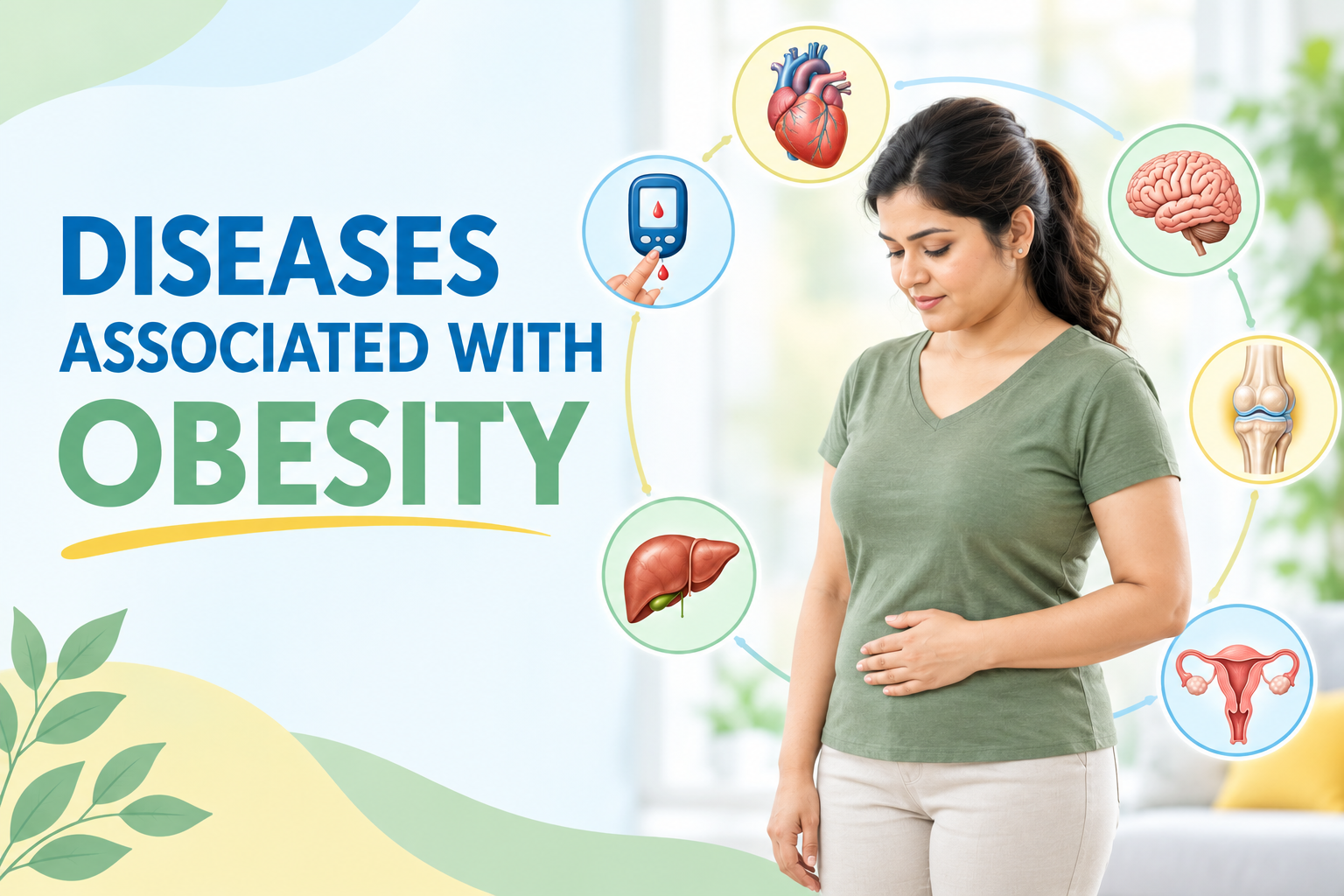
Learn How Excess Body Fat Affects Our Health
Obesity is more than a concern about body weight or physical appearance. Excess body fat can alter hormonal and metabolic processes, affect the functioning of several organs and increase the risk of numerous chronic diseases.
Fat stored around internal abdominal organs, known as visceral fat, is particularly important because it is associated with insulin resistance, inflammation and metabolic abnormalities. However, individual risks vary according to genetics, fat distribution, age and other factors.
Understanding these associations helps explain why obesity is an important health concern.
1. Prediabetes and Type 2 Diabetes
Obesity is a major risk factor for insulin resistance and type 2 diabetes.
Insulin is a hormone that helps glucose move from the bloodstream into cells. In insulin resistance, the body’s cells respond less effectively to insulin, making blood glucose regulation more difficult.
Excess visceral fat can contribute to insulin resistance through the release of fatty acids and inflammatory signalling substances. Initially, the pancreas compensates by producing more insulin. Over time, it may become unable to maintain normal blood glucose levels.
Prediabetes occurs when blood glucose is higher than normal but does not meet the criteria for diabetes. If the underlying abnormalities progress, type 2 diabetes may develop.
Persistently elevated blood glucose can damage blood vessels and nerves, increasing the risk of heart disease, stroke, kidney disease, retinal damage and other complications.
2. High Blood Pressure
Obesity is associated with an increased risk of hypertension, or persistently elevated blood pressure.
Excess body fat can alter kidney function, increase sodium retention and affect hormonal regulation and the sympathetic nervous system. The greater circulatory demands of a larger body may also increase the workload on the heart.
Uncontrolled hypertension damages blood vessels and increases the risk of heart attack, stroke, heart failure and chronic kidney disease. It frequently occurs alongside insulin resistance and other metabolic abnormalities.
3. Coronary Artery Disease, Heart Attack and Stroke
Obesity increases cardiovascular risk through its association with hypertension, insulin resistance, abnormal blood lipid levels and inflammation.
These factors can promote atherosclerosis, in which fatty deposits accumulate within artery walls. Narrowing or blockage of the coronary arteries can cause angina or a heart attack, while blockage of an artery supplying the brain can cause an ischaemic stroke.
Obesity is also associated with an increased risk of heart failure and certain heart rhythm disorders.
4. Fatty Liver Disease
Excess body fat is closely associated with fat accumulation in the liver. The condition formerly known as non-alcoholic fatty liver disease is now commonly called metabolic dysfunction-associated steatotic liver disease (MASLD).
Insulin resistance, increased delivery of fatty acids to the liver and changes in fat metabolism contribute to this accumulation.
Although fatty liver may initially cause no noticeable symptoms, some people develop liver inflammation and cell injury. Progressive damage can lead to fibrosis, cirrhosis and, in advanced cases, liver failure or liver cancer.
The condition is frequently associated with abdominal obesity, type 2 diabetes and elevated triglycerides.
5. Abnormal Blood Lipids and Metabolic Syndrome
Obesity, particularly abdominal obesity, is associated with a characteristic pattern of metabolic abnormalities, including elevated triglycerides and reduced HDL cholesterol. LDL cholesterol may also be abnormal.
When abdominal obesity, high blood pressure, elevated blood glucose, high triglycerides and low HDL cholesterol occur together, the condition is known as metabolic syndrome.
Metabolic syndrome reflects disturbances in several interconnected metabolic processes and is associated with an increased risk of type 2 diabetes and cardiovascular disease.
6. Osteoarthritis and Joint Problems
Obesity increases the mechanical load on weight-bearing joints, particularly the knees and hips, contributing to the development and progression of osteoarthritis.
Excess body fat may also promote inflammation that affects joint tissues. This helps explain the association between obesity and osteoarthritis in joints that do not bear body weight, such as the hands.
Osteoarthritis can cause pain, stiffness and reduced mobility, interfering with walking, climbing stairs and other everyday activities.
7. Obstructive Sleep Apnoea
Obstructive sleep apnoea occurs when the upper airway repeatedly narrows or becomes blocked during sleep, interrupting normal breathing.
Fat deposits around the neck and upper airway can contribute to airway narrowing, while abdominal obesity may affect breathing mechanics.
Symptoms include loud snoring, pauses in breathing, waking up gasping and excessive daytime sleepiness. Repeated breathing interruptions fragment sleep and may reduce blood oxygen levels.
Sleep apnoea is associated with hypertension and increased cardiovascular risk.
8. Polycystic Ovary Syndrome (PCOS)
Polycystic ovary syndrome, or PCOS, is a hormonal and metabolic condition affecting women of reproductive age.
It may cause irregular menstrual cycles, impaired ovulation, acne, excess facial or body hair and difficulty becoming pregnant.
Insulin resistance is common in PCOS. Elevated insulin levels can stimulate the ovaries to produce more androgens, hormones that may interfere with normal follicular development and ovulation.
Obesity can aggravate these metabolic and hormonal disturbances in some women, although PCOS also occurs in women who are not overweight.
9. Infertility and Pregnancy Complications
Obesity can affect reproductive function in both women and men.
In women, excess body fat and associated insulin resistance may interfere with hormonal regulation and ovulation. In men, obesity is associated with an increased risk of erectile dysfunction and may be associated with altered reproductive hormone levels and impaired semen quality.
During pregnancy, obesity is associated with a higher risk of gestational diabetes, hypertensive disorders such as pre-eclampsia, and certain delivery complications.
Fertility and pregnancy outcomes are influenced by many factors, of which obesity is only one.
10. Certain Cancers
Excess body fat is associated with an increased risk of several cancers, including cancers of the endometrium, breast after menopause, colon and rectum, kidney, liver and pancreas.
Potential mechanisms include changes in insulin and insulin-like growth factor signalling, altered sex hormone levels and chronic low-grade inflammation. These changes may influence cell growth and cancer development.
The strength of the association varies between cancer types. Obesity does not cause every cancer, and cancer can occur in people of any body size.
11. Chronic Kidney Disease
Obesity can increase the workload on the kidneys and alter their normal function. It also increases the risk of diabetes and hypertension, two major causes of chronic kidney disease.
Over time, these metabolic and circulatory disturbances can damage the kidneys’ filtering structures. Kidney disease may progress for years without obvious symptoms.
12. Gallstones and Digestive Disorders
Obesity increases the risk of cholesterol gallstones. Changes in cholesterol metabolism can cause bile to contain more cholesterol than it can keep dissolved, allowing crystals to form and develop into stones.
Gallstones may cause no symptoms, but they can also produce severe abdominal pain, gallbladder inflammation or obstruction of the bile ducts.
Obesity is also associated with gastro-oesophageal reflux disease (GERD). Increased abdominal pressure can encourage stomach contents to flow back into the oesophagus, causing heartburn and regurgitation.
13. Gout
Gout is an inflammatory arthritis caused by the deposition of urate crystals in joints and other tissues.
Obesity is associated with elevated uric acid levels and a greater risk of gout. Insulin resistance can reduce the kidneys’ ability to excrete uric acid, contributing to its accumulation.
Gout causes episodes of intense joint pain, swelling, redness and tenderness, commonly affecting the joint at the base of the big toe.
14. Mental Health and Quality of Life
Obesity is associated with an increased risk of certain mental health difficulties, including depression, although the relationship is complex and can operate in both directions.
Physical discomfort, reduced mobility and sleep disturbances may affect quality of life. Weight-related stigma and discrimination can also contribute to emotional distress, while mental health difficulties may influence eating patterns, sleep and physical activity.
Not everyone with obesity experiences psychological problems, and mental health is influenced by numerous biological and social factors.
Conclusion
Obesity is associated with a wide range of health conditions because excess body fat can influence glucose metabolism, hormonal signalling, inflammation, blood pressure and the functioning of several organs.
Important associations include type 2 diabetes, hypertension, cardiovascular disease, fatty liver, metabolic syndrome, osteoarthritis and obstructive sleep apnoea. Obesity is also associated with PCOS, reproductive difficulties, certain cancers, chronic kidney disease and other health problems.
Abdominal fat is particularly relevant because of its association with insulin resistance and metabolic abnormalities. Understanding these relationships helps establish that obesity is not merely a cosmetic concern, but a complex health condition with consequences that can extend throughout the body.
Related articles